In the landscape of Australian vocational and higher education, the regulatory horizon is constantly shifting. We often view compliance as a periodic storm to be weathered: a frantic gathering of documents and a cross-checking of boxes in the weeks preceding an audit. However, for the wise practitioner, compliance is not an external event; it is the structural integrity of the educational build itself.
The primary artifact of this integrity is the learning resource. Specifically, your assessment tools.
We are currently witnessing a significant pivot in regulatory focus. As we move toward 2026, authorities like the Australian Skills Quality Authority (ASQA) are transitioning from simple transactional document verification toward "practice verification." This shift signifies that the regulator is no longer merely looking at what you say you do, but at the evidence of what is actually occurring. In this new era, your learning resources are not just pedagogical guides: they are your primary defense and your most persuasive evidence.
The Dual Mandate: Pedagogy and Evidence
It is a common misconception that assessment tools exist solely for the student’s benefit. While their primary purpose is to measure competency or academic achievement, their secondary role is arguably more critical for the longevity of a Registered Training Organisation (RTO) or Higher Education provider: they serve as the evidentiary record of regulatory adherence.
It is not what you teach; it is how you prove they learned.
When an auditor examines an assessment tool, they are looking for the "architecture of proof." They are seeking a clear, unbreakable link between the unit of competency and the student’s performance. If your tools are flimsy, generic, or poorly mapped, the entire structure of your accreditation is at risk. High-quality instructional design ensures that every question, every observation checklist, and every portfolio requirement serves this dual mandate.
Joining the Dots: The Pedagogy of Mapping
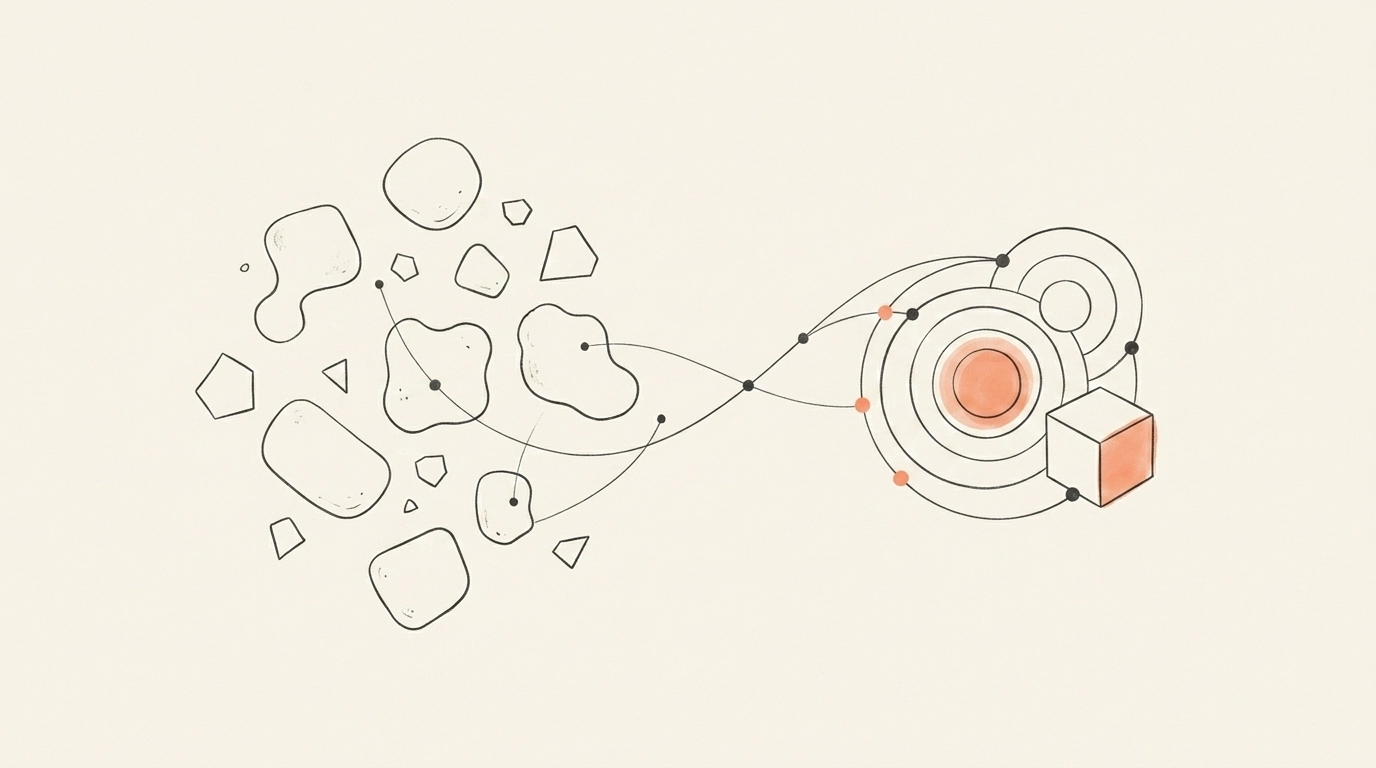
In my work, I often speak about the necessity of "joining the dots." This isn't just a catchy phrase; it's a rigorous methodological approach to course development. In the context of assessment design, joining the dots means creating a seamless narrative that runs from the training package requirements through to the student’s submitted evidence.
Most RTOs possess a mapping document. However, a map is only as good as the terrain it represents. If your mapping claims a student is being assessed on a specific complex skill, but the assessment tool only asks a multiple-choice question, the "dots" are not joined: they are miles apart.
"The mapping document is the blueprint; the assessment tool is the foundation. If the two do not align with mathematical precision, the audit will find the cracks."
Rigorous mapping requires an architectural mindset. It involves breaking down each Performance Criteria, Foundation Skill, and Knowledge Evidence into observable actions. We then design the resource to capture that specific action. When the auditor arrives, you don't just show them a spreadsheet; you show them a designed experience where the evidence flows naturally from the task.
Compliance by Design: The Architect’s Quiet Craft
There is a profound difference between "fixing" a course for compliance and "designing" a course for compliance. I call this Compliance by Design.
Compliance by Design is the quiet craft of embedding regulatory requirements into the very DNA of the learning resource. Instead of treating the Standards for RTOs or the TEQSA Threshold Standards as a post-script, we treat them as the building codes. This approach saves an extraordinary amount of time and stress during regulatory liaison.
When we approach resource design through this lens, we move away from the "checklist" mentality. We stop asking, "Does this cover the unit?" and start asking, "How does this tool demonstrate a valid, reliable, and fair assessment of the student’s skills in a real-world context?"
By building rigour into the initial learning resource design, you eliminate the need for the "pre-audit panic." You are not searching for evidence; the evidence is being generated automatically by the sheer quality of the tools being used.
Moving Beyond the Generic: The Risk of Off-the-Shelf
In an effort to save costs, many institutions opt for generic, "off-the-shelf" assessment tools. While these may provide a starting point, they are often the weakest link in an audit. Generic tools are, by definition, built for everyone and no one. They lack the specific industry context, the unique "brand" of your institution, and the nuanced alignment required for high-stakes accreditation.
ASQA's 2026 guidance emphasizes that resources must be endorsed by industry and reflect current practice. A generic tool purchased three years ago is unlikely to meet this standard.
Fit-for-purpose resources are those that have been tailored to the specific cohort and delivery mode of your organisation. Whether you are teaching Applied Blockchain or Machine Learning, the assessment must mirror the actual environment the student will work in. If the tool is not fit for the industry, it is not fit for the regulator.
The Role of Clarity and Architecture
Information architecture is often overlooked in instructional design, yet it is the factor that most influences an auditor’s perception of quality. An assessment tool that is cluttered, confusing, or logically inconsistent suggests a lack of rigour in the training itself.
Clarity in design leads to clarity in outcomes. When a student understands exactly what is required of them, they produce better evidence. When an assessor has a clear, detailed marking guide with model answers (a key focus for ASQA in the coming years), they make more consistent decisions.
This consistency is the bedrock of "practice verification." If three different assessors use your tools and produce three different outcomes for the same student evidence, your system has failed. Professional resource design provides the framework that ensures every assessor: and every auditor: sees the same clear picture of competency.
Transforming Knowledge into Evidence
My focus is on transforming complex subject matter: the disruptive tech, the business models of the future, the intricate regulatory frameworks: into practical, accessible, and fit-for-purpose learning experiences. I make it genuinely easy to understand how to do something, not just what it is.
Whether it's full accreditation for a new qualification or the refinement of short-course assessment strategies, the goal is always the same: to provide a structure so sound that the audit becomes a mere formality.
Your assessment tools are your best audit evidence because they are the most direct reflection of your organisation's standards. They are the tangible proof of your pedagogical integrity. When you invest in high-quality design, you aren't just buying a document; you are building an insurance policy for your institution's reputation.
It is not enough to be compliant; you must be compliant by design.
If you are looking to bring rigour, clarity, and architectural purpose to your learning resources, let’s discuss how we can join the dots for your next audit. From course concept development to full regulator submissions with ASQA and TEQSA, I ensure that your educational foundations are as sophisticated as the technology you teach.
Discover more about my approach to course development and instructional design on my website.