
In an era defined by an overwhelming deluge of information, the challenge for organizations is no longer the acquisition of knowledge, but the structural integrity of its delivery. We live in a world where content is ubiquitous, yet comprehension remains elusive. Many educational institutions and corporate entities mistake the accumulation of data for the creation of expertise.
The pivot from information to insight requires a deliberate hand. This is the domain of the instructional designer: a role frequently misunderstood and often undervalued, yet central to the success of any modern learning ecosystem.
It is not merely a task of writing content; it is the rigorous discipline of designing the architecture of the mind.
The Architect of Information
To understand what an instructional designer does, one must first abandon the notion that they are "content writers." A writer produces text; an instructional designer produces transformation.
Think of a building. A writer might provide the bricks, but the instructional designer is the architect who ensures the foundation is sound, the circulation is logical, and the structure serves its intended purpose. Without the designer, you have a pile of materials; with them, you have a functional, enduring space for growth.
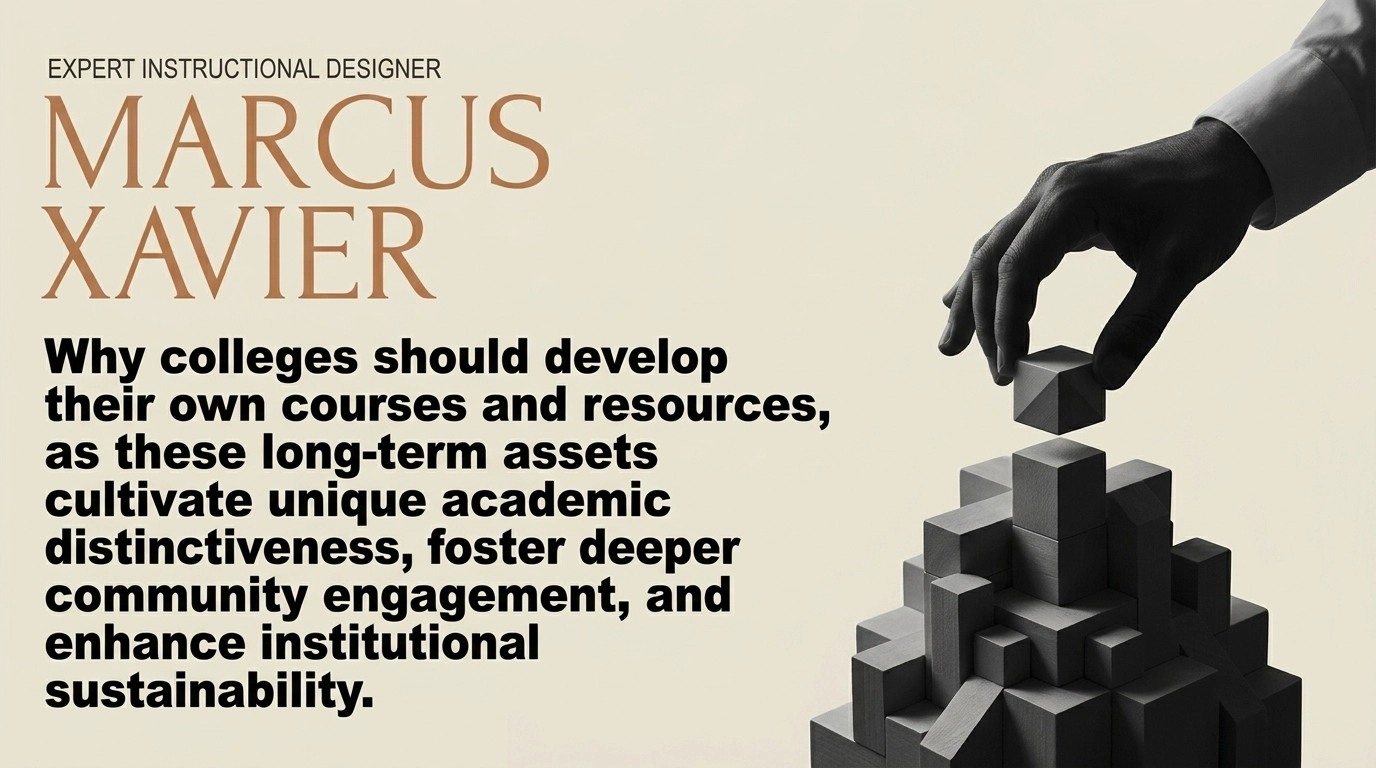
At its core, instructional design is the application of cognitive science and pedagogical frameworks to the development of learning experiences. It is a process of mapping the journey from novice to expert with surgical precision.
"It is not what to teach: it is how to design the experience of learning."
Whether we are discussing accredited course development or non-accredited corporate training, the objective remains the same: to create a pathway where the learner does not simply "know" the material but can "apply" it with competence.
Joining the Dots: From Complexity to Clarity
The true value of a wise practitioner in this field lies in their ability to "join the dots." In technical landscapes: such as Machine Learning, Applied Blockchain, or Artificial Intelligence: information is often dense, fragmented, and intimidating.
An instructional designer acts as a translator between the subject matter expert (SME) and the learner. We take high-level technical complexity and distill it into accessible, fit-for-purpose learning resources. This process involves:
- Course Concept Development: Identifying the gap between current capability and desired outcomes.
- Learning Resource Design: Creating the scaffolding that supports a learner as they climb toward mastery.
- Assessment Strategy and Mapping: Ensuring that every assessment is a true measure of competency, not just a memory test.
When dealing with emerging tech literacy, the instructional designer ensures that the "why" and the "how" are as prominent as the "what." We provide the clarity that allows a business leader or a student to navigate digital transformation without being overwhelmed by the jargon.
The Rigour of Regulation: ASQA and TEQSA Compliance
In the Australian educational landscape, instructional design is the bridge between educational intent and regulatory requirement. Organizations operating under the Australian Qualifications Framework (AQF) face a high bar of compliance.
Navigating the standards set by the Australian Skills Quality Authority (ASQA) or the Tertiary Education Quality and Standards Agency (TEQSA) is not a clerical exercise; it is an exercise in instructional rigour.
A professional designer does not just complete a regulator submission; they build a system of evidence. We map learning outcomes to performance criteria with exhaustive precision, ensuring that assessor guides and tools are not only compliant but genuinely effective in the classroom. This is the "quiet craft": the behind-the-scenes discipline that transforms a curriculum into a robust, accredited qualification.
Why Your Organization Needs an Instructional Designer
In 2026, the cost of poor training is higher than ever. Whether it is the risk of non-compliance with regulators or the loss of competitive advantage due to a workforce that cannot keep pace with AI integration, the stakes are absolute.
1. Accuracy in Complex Subject Matter
When your subject matter involves Disruptive Business Modelling or Artificial Intelligence, you cannot afford ambiguity. An instructional designer brings a standard of excellence that ensures technical accuracy is never sacrificed for the sake of simplicity.
2. Efficiency of Delivery
Time is the most scarce resource in corporate training. A well-designed course eliminates the "fluff," focusing only on the critical path to competency. This streamlined approach ensures that learning is both impactful and efficient.
3. Scalability and Consistency
By creating a structured framework and comprehensive learning tools, an instructional designer allows an organization to scale its training without losing quality. Every learner receives the same high standard of education, regardless of the facilitator.

A Perspective of Craft
I approach every project with the mindset of an information architect. My role is to bring purpose to complex subject matter and to make the difficult look easy. This is not achieved through shortcuts, but through a deep commitment to the craft of pedagogy and a focus on the practical application of knowledge.
Whether you are an RTO looking to launch a new accredited course, or a corporate L&D director needing to upskill your team in AI literacy, the foundation of your success lies in the design.
Instructional design is not an optional embellishment; it is the fundamental infrastructure upon which all successful learning is built. It is the difference between a workforce that is merely informed and one that is truly capable.

If you are looking to transform your expertise into a structured, impactful learning experience, let’s discuss how we can build your next educational framework together. Explore my services in instructional design or contact me today to start the conversation.