We are living through the apex of the 2026 AI gold rush. Every week, a new foundational model drops, compute costs shift, and thousands of ambitious founders rush to spin up wrappers, agents, and specialized applications. The universal chorus echoing across incubator spaces, pitch nights, and venture podcasts is deceptively simple: Just build it.
In the tech industry, this mantra has long been gospel. The romanticized startup narrative celebrates the lone engineer who stays up for seventy-two hours, pushes code to production, and lets the market sort out the rest. But in today’s mature, hyper-competitive technological landscape, that advice is no longer just naive, it is commercial suicide.
I spend my days working directly with entrepreneurs, tech innovators, and business leaders who are eager to transform raw technological capability into commercial reality. Through my work in business modelling and disruptive business strategy, I help founders join the dots, bridging the chasm between a clever technical concept and a resilient, investor-ready enterprise. What I witness repeatedly is a tragic pattern: brilliant minds building sophisticated software on top of unvalidated foundations, only to stall the moment they face sophisticated investor scrutiny.
"Building without a business model is like building a skyscraper without a foundation, it looks impressive on the skyline, but it cannot withstand the first tremor of market reality."
The Two Stumbling Blocks That Capital Markets Will Not Ignore
If you ask seasoned venture capitalists and institutional investors what frustrates them most about the current wave of tech applications, the answer rarely touches on code quality or model latency. Investors are drowning in functional demos. What they are starved of, and what they ruthlessly interrogate, boils down to two fundamental pillars:
- Sustainable Value Creation: Does this venture solve an economically painful workflow in a way that generates compounding value, or is it merely renting space on someone else's platform?
- Defensible Technological Innovation: Is the startup demonstrating genuine, innovative use of technology, or are they operating a thin, commoditized wrapper that will be rendered obsolete by the next native model update?
When entrepreneurs rush blindly into execution under the banner of "just build it," they skip the rigorous architectural planning required to answer these two questions. They construct an elaborate product structure without ever mapping the underlying economic architecture.
It is not a lack of engineering talent that sinks most modern startups; it is a catastrophic absence of business modelling.

The Fallacy of the MVP Without a Model
The Minimum Viable Product (MVP) has been misinterpreted for over a decade. Founders treat it as license to cobble together a functional interface, attach a Stripe integration, and launch on product discovery platforms.
This approach ignores a fundamental truth of modern enterprise: software is cheap, but sustainable value is extraordinarily rare.
When you lead with code rather than architecture, several systemic failures occur:
- Inverted Unit Economics: Many AI and blockchain applications discover too late that their inference or transaction costs scale faster than their revenue per user. They scale usage while actively compounding their financial losses.
- The Platform Squeeze: When your entire value proposition relies on calling an external LLM or blockchain node without proprietary workflow integration, you possess zero defensibility. You are building on rented land.
- The Investor Impasse: When you sit across from a sophisticated investor and they ask about your customer acquisition cost (CAC), lifetime value (LTV), and strategic defensibility, responding with "we're iterating fast and growing our user base" is no longer acceptable.
To explore how these economic realities manifest across different technological paradigms, I often examine frameworks like Beyond the Hype: Transforming Cool Tech into Sustainable Value, where I dissect the precise mechanisms required to transition from speculative novelty to enduring market utility.
Shifting From Execution Speed to Structural Rigour
Quiet craft and intellectual discipline are rarely celebrated in tech headlines, yet they remain the absolute prerequisites for enduring success. Before writing a single line of production code or committing capital to cloud infrastructure, an entrepreneur must engage in rigorous diagnostic thinking.
This requires mastering the intersection of disruptive business modelling, advanced AI training for business, and practical Blockchain Literacy. It requires treating your business model as a precision instrument rather than an afterthought scribbled on a whiteboard.
"It is not what technology you deploy, it is how structurally sound your business model is when deployed against real market friction."
As I often emphasize in The Architecture of Enterprise, your business model is not a passive business plan designed to appease bankers; it is an active, stress-tested blueprint of how your enterprise captures, creates, and delivers value.

The Litmus Test Before You Spend Your First Dollar
Before you invest another dollar or spend another sleepless night writing code for your next tech venture, you need a diagnostic framework that acts as an uncompromising filter. You need to subject your concept to a rigorous litmus test that evaluates whether your idea can survive contact with institutional investors and unforgiving market economics.
This brings us directly to the core diagnostic tool that separates enduring ventures from expensive hobbies: The Three-Value Test.
In my follow-up piece, The Three-Value Test: Why Most Blockchain and AI Ventures Fail Before They Launch, I break down the exact functional, economic, and strategic criteria you must evaluate before writing your first line of code.
Stop letting the rush to build override the discipline of design. Take the time to map your architecture, validate your economic engine, and ensure your venture is built to endure.

About Marcus Xavier
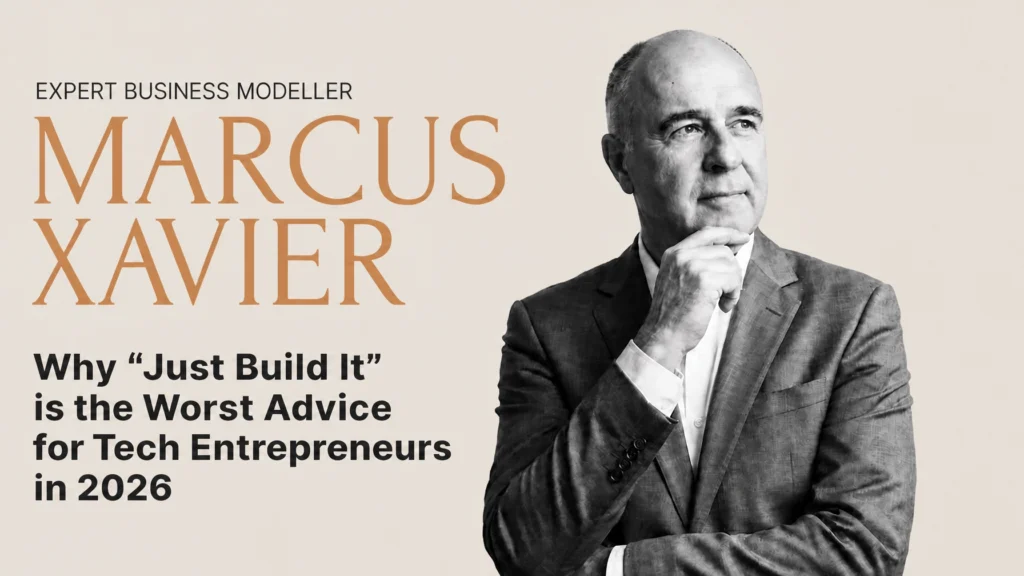
Marcus Xavier is an expert in creating business models from technical ideas, helping entrepreneurs "join the dots" between innovation and sustainable value. He specializes in disruptive business modelling, AI and blockchain strategy, and enterprise architecture.
Ready to validate your business model before you build? Connect with Marcus here.